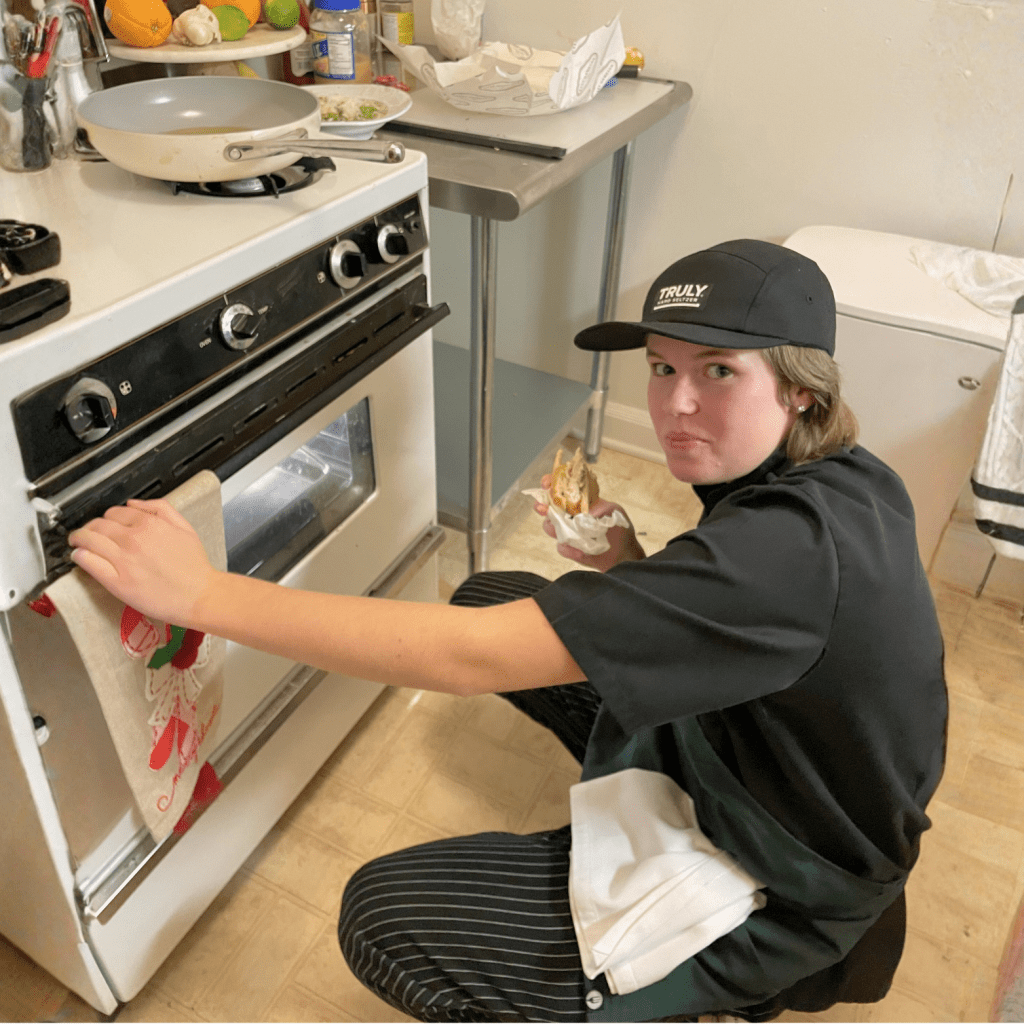
Interview with the best chef on planet Earth
By Brooklyn Rodgers | February 17, 2026 | 4:40 PM
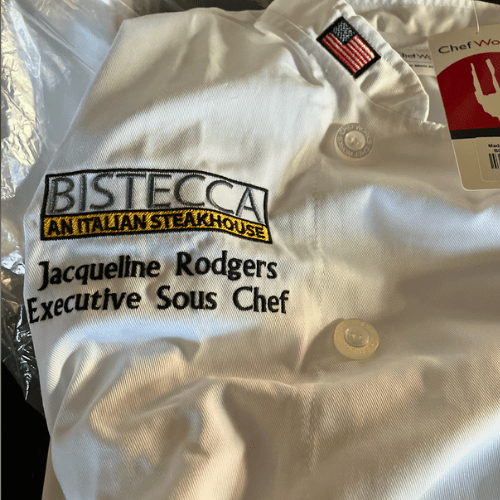
My younger sister, Jacqueline Rodgers, is currently the executive sous chef at Bistecca, an Italian steakhouse in our hometown of Highland Village, Texas. She graduated from Johnson & Wales in May 2024 with an Associate of Applied Science (AAS) in Culinary Arts, then went on to work at Mister Charles in Dallas before returning to Bistecca- where she’d worked back in high school.
It’s no coincidence that my sister and I both have a soft spot for the hospitality industry. The summer between my freshman and sophomore years at UT Austin, I started working at an Italian restaurant in Flower Mound called Fiori that had just opened. It wasn’t my first service industry job- I’d hosted and served in high school- but Fiori ended up being Jacqueline’s first-ever job, at the age of 15. We both worked at there off and on over the course of 3 years from the summer of 2019 to winter of 2021.
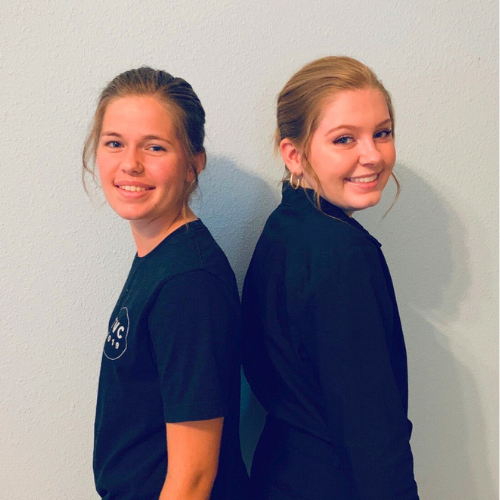
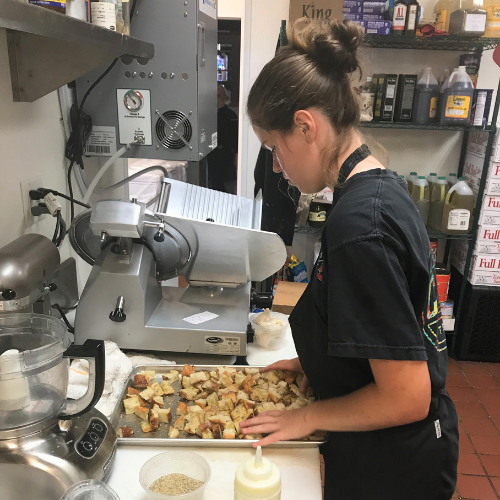
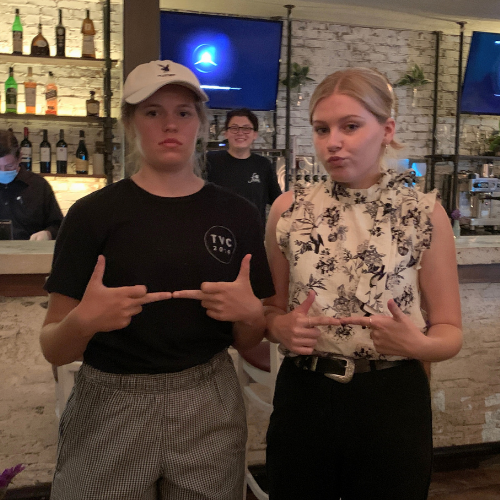
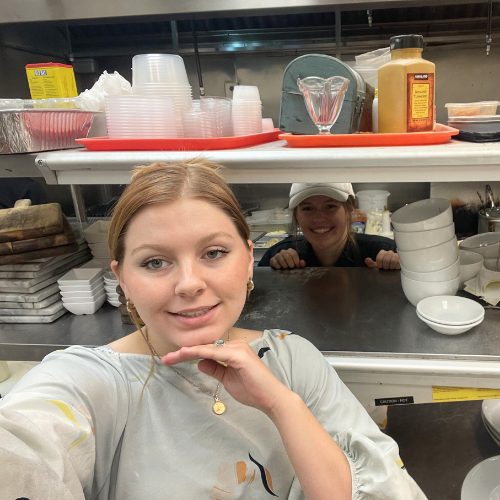
At the beginning, I was mortified to have my little sister come work at the same place as me. Looking back, it was one of the best summers of my life. I worked front of house as a server, and she worked back of house- starting with prep, salads, and desserts, and eventually working her way up to the line, handling pretty much anything they threw at her.
We worked long hours that summer and usually ended the night at Sonic, McDonald’s, or Rosa’s (and sometimes a feast of all three) because they were the only things open when we got off—her finishing up scrubbing floors, me polishing glassware.
We also ate a lot of fantastic, family-recipe Italian food, and both learned to cook from the brothers who owned the restaurant. To this day, I still text her to remind me of the steps for chicken piccata, parmesan, genovese, tiramisu, and more.
These days, at family gatherings, I’m the one more likely to cook at home- while Jacqueline spends nearly all of her time cooking professionally at Bistecca. It’s been a privilege to watch her grow into a boss at 22: moving from a proficient line cook to someone who now helps manage an entire kitchen, including inventory, ordering, and people. I’m incredibly proud of her, and lucky to have a close friend in her- someone who’s just as interested as I am in the drama (and success) of the Dallas hospitality scene.
I love reading chef interviews, and recently I remembered I know a real-life chef I could coerce into one.
What follows is a dialogue from an hour-long phone call we had on Sunday, February 15, 2026, a few weeks after Jacqueline received her promotion to executive sous chef at Bistecca. This is my first time interviewing anyone- and also my first time attempting to transcribe, edit, and organize the contents of an hour-long conversation. By nature, it’s also self-indulgent, because I find nearly everything my sister says interesting and, honestly, kind of profound.
So yes: this post is long and a little meandering, but hopefully full of good nuggets.
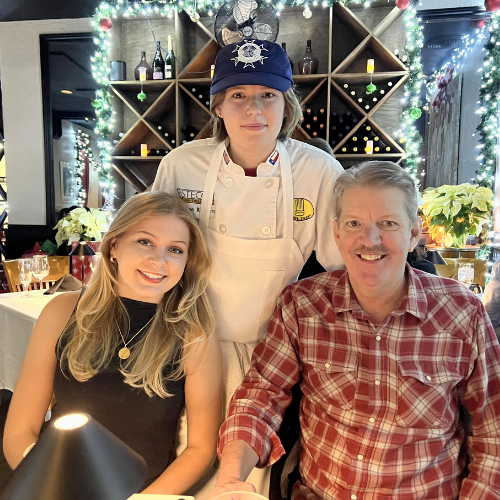
If you’re reading this, you probably already know both of us. If you don’t, I hope this interview introduces you to a young leader in the hospitality industry who’s going to do big things- things I hope I’ll get to write about for a long time.
Enjoy.
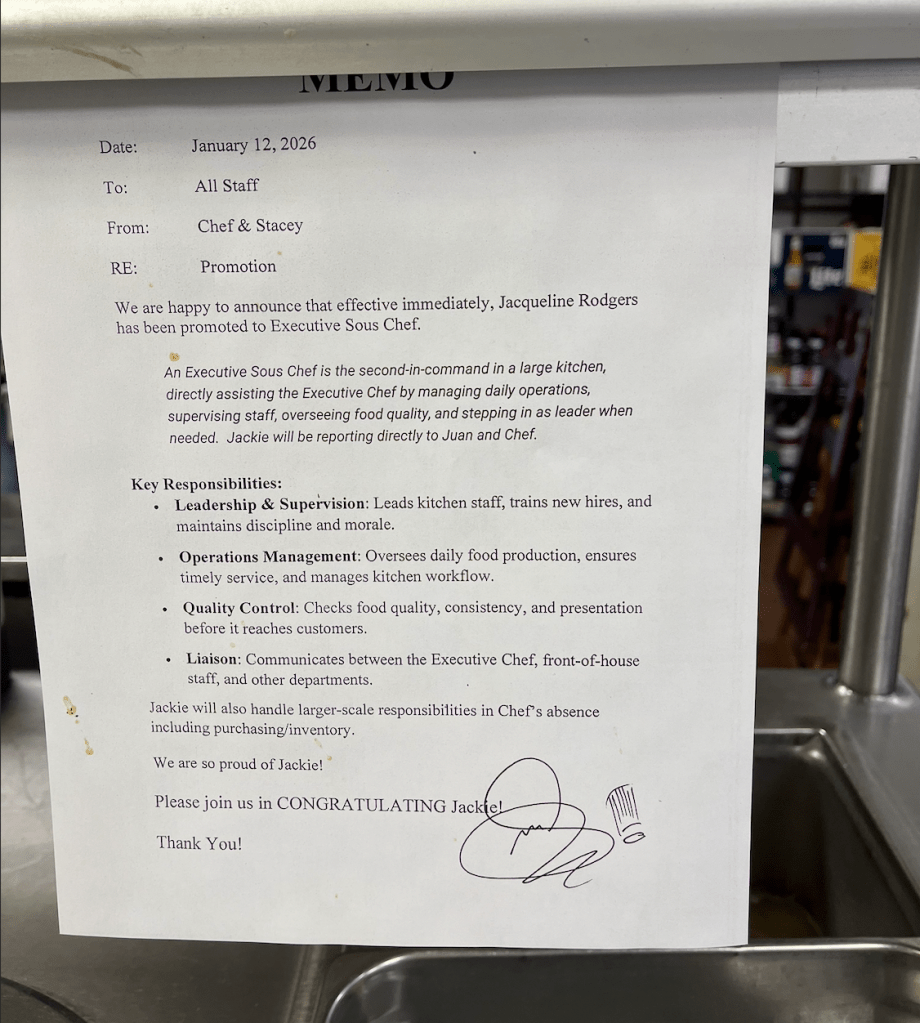
BR: Okay. My first question- You became an executive sous chef at 21 or 22. Can we clarify your age at the time of your promotion?
JR: 22.
BR: Okay, but you had freshly just turned 22, right?
JR: I might have been 21.
BR: I mean, that’s a pretty big deal to get promoted to executive chef at 21.
JR: Well, it is executive sous chef, but yeah.
BR: It’s still a big deal. So what does an executive sous chef do?
JR: Basically, I’m just chef’s second. So whenever he isn’t around, I’m the person to go to. He’s still there as the owner and the executive, but he wanted to promote someone to start taking care of stuff, be a manager, take over the food orders.
BR: When did you first realize you wanted to cook professionally?
JR: Probably when I was about 16, working at Fiori. I admired the kitchen manager, Logan. He was hardworking, and he worked so fast, always on top of his game, looked like he was in charge, knew what he was doing, and was confident. And he would teach me.
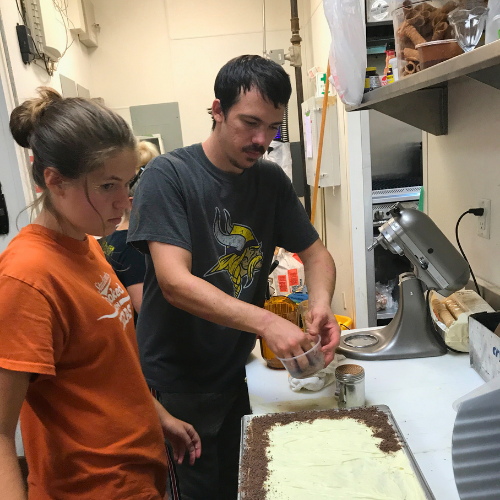
BR: Logan was a guy to admire at that time. He was incredibly passionate about the job, which is rare, and he was an enthusiastic trainer, which is also rare.
So Fiori sparked your passion to attend culinary school at Johnson & Wales in North Carolina. What was the most surprising or formative thing about culinary school?
JR: I would say the people that you meet. You get a lot of the same people in the classes, and you repeat a few teachers. So building connections — I still have people I talk to, still connected with some of the chefs. And I’m sure it helps you learn; it helps it not be so scary, you build a community and it helps you grow.
BR: Yeah, it’s pretty cool how you now have connections in all these restaurants across the country.
JR: Mm hmm. Yeah, I didn’t think I was gonna make friends. I thought culinary school would be cutthroat, but it wasn’t like that.
BR: What skills matter more in the real world than they did in school?
JR: Well shit — pretty much everything.
BR: It’s totally different, right?
JR: A lot of people in culinary school had never even had a job prior. So you go in and the teacher gives you assignments — usually five or six recipes. You do some alone, some with a group, some as a class. You’re following a piece of paper that already has a timeline on it. You only have seven hours in class, so everything is timed to be perfect.
But when you’re actually in a kitchen, that doesn’t happen. Shit goes wrong. You run out of stuff. More people come that day than expected. Less people come; you don’t prep enough. You run out of an ingredient. Anything can go wrong in a day working in a restaurant. In school, everything is very structured and prepared.
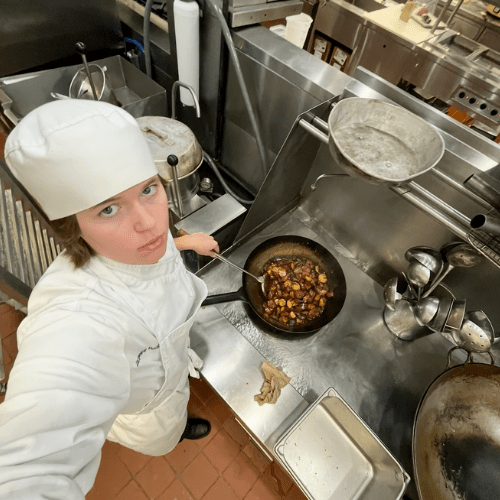
BR: Yeah, culinary school sounds kind of like a lab. Everything is controlled — versus restaurants are super messy. So I can see how people might do well in culinary school and then not well in a real restaurant environment.
JR: Very much so, yes. You could definitely tell the people who would get really stressed out or flustered in school, and I would think, “How are they ever gonna work in a restaurant?”
BR: You worked at Mister Charles straight out of culinary school. How did your time with Duro Hospitality shape you?
JR: I was put in an environment that did a high number of covers. Working at mom-and-pops is great — but we don’t do that many people. Mister Charles is a pretty decent-sized restaurant.
BR: How many seats at Mister Charles?
JR: I think about 150. On a good night they could flip it twice — people linger because they’re spending a lot of money. But I think the most we would do on a Friday or Saturday was like 250, maybe more. So at first I was dizzy with the high volume.
Second, they do a different type of ticket calling. At mom-and-pops, we just don’t have a need for that. So at Mister Charles, I learned a classical French kitchen brigade where the executive chef calls out tickets, and you make the food — you don’t see a ticket.
Also, being in an environment where every day the executive and sous chefs are doing R&D and asking people for opinions… and Mister Charles is New American, doing crazy stuff. At Bistecca, we do classic, the same thing. It’s always gonna be that. Nothing’s gonna change. So being in an evolving environment — and being part of the Dallas food scene at a restaurant that’s highly liked — that was a big influence.
BR: Yeah, most restaurants probably don’t have the budget to pay someone who’d even have time to execute on R&D. But Mister Charles is one of the most profitable restaurants in Dallas by alcohol sales. And by the way — you had Valentine’s Day dinner there this week. How was that?
JR: It was incredible. Not much has changed on the menu, which surprised me. There were a few things, but I guess they’re trying to stick to what people like.
BR: Well, Dallas diners are basic.
JR: But for what they do, it’s really incredible. Their processes are insane — everything is home made. Have you eaten there?
BR: I haven’t. I’ve only drank.
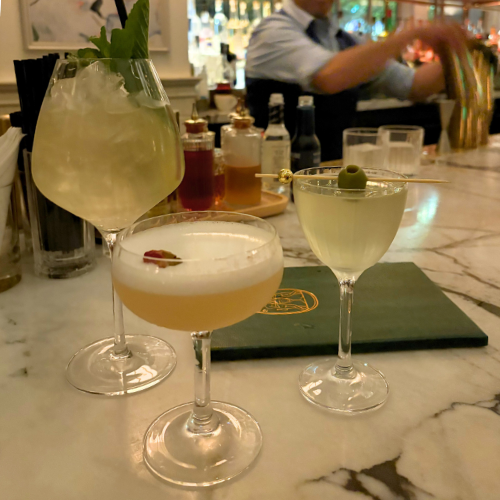
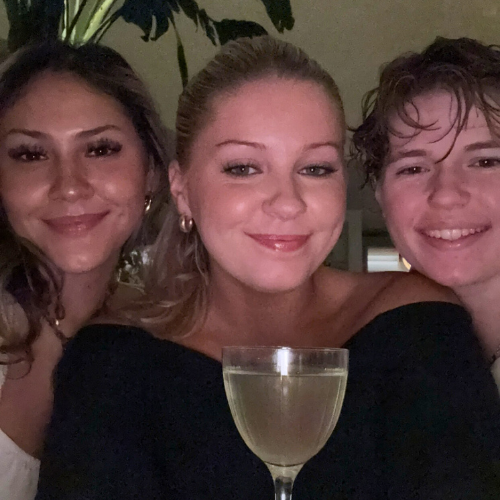
JR: Yeah, you need to go eat there. I’m obviously biased, but I’ve been saying they deserve a Michelin star. I think it’s hands down one of the best restaurants I’ve ever been to. Better than any Michelin-star food I’ve tasted in Mexico City or here in Dallas.
BR: Mister Charles is in the Michelin Guide. I can’t remember the designation — either Bib Gourmand or recommended. I think it’s recommended.
JR: It’s recommended, yeah.
BR: And there was that funny flub when they came out with the guide that they accidentally named “The Charles” instead of “Mister Charles,” because Duro names all their concepts with the Charles surname. Speaking of The Charles — did you hear they just gutted it and redid the interior and didn’t tell anybody? They just closed for like a week?
JR: That’s insane — but you know they’re making good money, not a lot of restaurants would be able to afford to close for a week.
BR: They can because they’re floated by Duro, and Mister Charles has those insane alcohol sales. I’ve wondered lately if The Charles would close or what they’d do. It’s relatively old for a restaurant, and Mister Charles is the hot new thing. So I’m surprised Duro invested in a remodel— but the Design District is about to get a huge influx of development, and they think it can be a market leader.
JR: I’ve heard from you and from a lot of people that their other restaurants — like Sister, or the new one, Norman’s — their food isn’t that good. The ambiance is insane, beautiful inside, but the food is just not on par. Mister Charles — obviously they won Michelin for drinks — and I had the best Cosmo, the best vodka soda. Even vodka soda can taste like shit depending on how people make it, but theirs is enjoyable. The drinks are right there, and the food is right there too. So I don’t know what’s going on at their other concepts.
BR: Did your time at Mister Charles prepare you to lead at Bistecca?
JR: I wouldn’t say necessarily. I think I just have the personality that… this might come as a surprise to you, but I’m always kind of taking the lead in certain positions. I think I have more confidence than others. Maybe I don’t show it a lot, but in the kitchen I’m very confident I know what I’m doing.
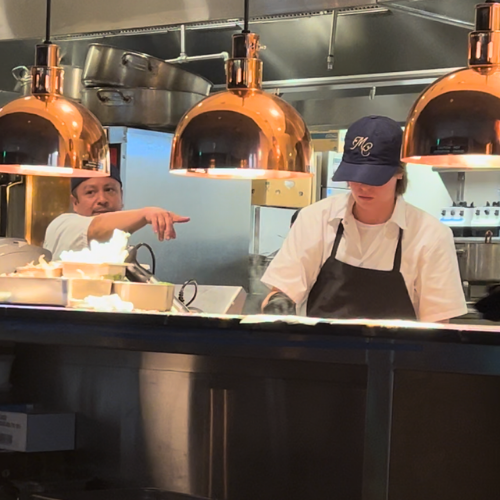
They told me when I first started, “Jacqueline, you have to find your voice.” Because I was quiet and nervous. It’s an open kitchen — people can hear you, see you — and I’m thinking, “How did I get so lucky to be here?”.
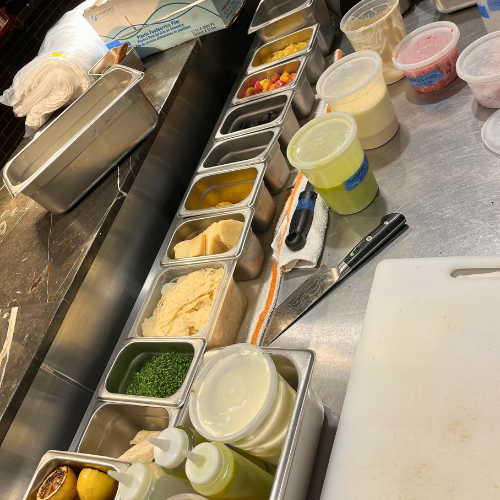
At Mister Charles, I was working on the pantry, but I was lucky enough to find myself on the line once or twice a night. One position was working the middle pass.
So the executive chef calls a ticket out, you repeat it, and everyone else responds. During service you’re basically the only source of communication the line cooks have, and you’re in direct communication with the executive chef. You control when plates go out. You don’t see tickets; only the exec sees them. They tell you what to tell them to make, and you manage them. So in that sense, I got leadership skills and confidence from that.
BR: That’s so cool — I didn’t know you got to work middle pass. And you said your leadership might be surprising to me — of course it’s not surprising. I’ve seen you work in a kitchen. You’re an Aquarius — natural charisma and solidness. And I know exactly how you got so lucky to work at Mister Charles: your brilliant sister helped you with your resume.
JR: Yeah, that could be true. That was definitely it. If it wasn’t for my sister, I would not have been at Mister Charles, and that’s for a fact. If she wouldn’t have driven to the interview and basically put me on that doorstep, I would not have went.
BR: Did I drive you to the interview?
JR: Yes, I was very nervous. You drove me to the interview, and then you drove me to all the other restaurants and made me walk in. Mister Charles was the only one that emailed me back and set up an interview. So I had to walk into the others and be like, “I’m looking for an internship.” I don’t know if people do that anymore.
BR: I don’t think they do.
JR: I was at the Texas Chefs Association and talking to this lady who does resumes and LinkedIn stuff, and I told her, “I would just walk into the job and ask.” And she looked at me like I was crazy — like no one does that.
BR: Hey, if it works, it works.
JR: I remember going into Local and Rye also to ask about a job.
BR: I love Local. Both those restaurants have fallen out of the conversation compared to Mister Charles, so it sounds like it worked out for you to end up there.
BR: What did it feel like stepping into leadership at your age, 21 or 22? We can’t decide.
JR: I have to get back to you on that one. Other than being overwhelmed with joy and feeling blessed and humble, the next thing I thought was: “Oh my gosh, how is anyone gonna take what I say seriously? I’m still young.”
BR: How do you earn respect from cooks who’ve been doing this longer than you’ve been alive?
JR: It helped that I wasn’t new at Bistecca. I didn’t just get hired — like “who the hell are you.” They know me and they respect me already. For me it was finding a way to come at it like: I’m a helping hand. These people have been here forever, but I’m here to do some things they don’t want to do, help them, and be the bad guy sometimes, because no one wants to be the bad guy. Not coming at it too strong, not like “I’m your boss now.” They’re happy for me- we’re all friends — I’ve been there three years. So it transitioned.
I show authority when I need to, but I’m humble and realize I can learn from them. Common goal: work together. Then, when it’s time to show authority, do it — when it’s appropriate.
BR: I hate to pull from Christian rhetoric, but the best leaders are servants. The best bosses I’ve worked for are happy to do any task — dirty work — even things they shouldn’t have to do.
JR: Sure. There’s nothing I don’t do. If we’re not busy, I’m making salads. Nothing is beneath me. I’m staying late scrubbing floors and my station. People might think “You’re in this position, you shouldn’t have to do that,” but I want to — I have pride in my work.
BR: So what kind of leader are you trying to be?
JR: Respected, but also someone seen as very hardworking. Someone people can confide in, ask for help, look up to… but also their friend, with expectations. There’s a fine line, and that’s what I’m trying to go for.
BR: Okay, we’re gonna shift to a really fun topic: being a woman. Restaurants are historically male-dominated. What has your experience been being a woman in the kitchen?
JR: When I was younger working at Fiori, I loved working — I was in bliss — and I soon came to realize not only was I outnumbered by men, but men didn’t take me seriously. Partially because of my age, but also because I was a woman.
Starting as young as I did and being a woman was very difficult. In all my restaurants I’ve had trouble with men respecting me, especially when I had authority. I’ve had men try to fight me. I’ve had men throw things at me. I’ve had men scream at me. I’ve had men make me cry and belittle me.
BR: And you had them fire you for personal reasons that had to do with me.
JR: Oh yeah. Fire me for no good reason.
BR: I’m working in a male-dominated industry too, and having even a few people who don’t see you as a woman first makes a massive difference. Have you had anyone who made space for you — saw you as a person first?
JR: Obviously the first one was Logan at Fiori. That is another hard thing in the restaurant industry because it’s so male-dominated — I’ve been touched up in too many kitchens, let’s just say the least. And I’m gay, and they know that, and still it happens. So working as a woman in the kitchen definitely has its downsides.
BR: What advice would you give young women who want to cook professionally?
JR: If anyone asked me, I’d tell them: be aware. These men are creeps and weird. You have to tell them “no.” But honestly, I don’t think I’ve figured it out for myself yet, so I don’t know if I can give good advice.
BR: Yeah, unfortunately, I think I’m still figuring out how to set those boundaries, too, without harming my career.
JR: Exactly. In the past, I’ve had male coworkers touch me on the waist or do weird things — now I recognize it. I had a boss who would Snapchat me when he was like 28, and I was 15. At the time, I was young and naive; I didn’t realize anything was wrong.
BR: Culinary schools should almost have a seminar: you’re going into a male-dominated field, here’s what to watch for.
JR: I agree. It should be taught — in high school culinary programs too. A majority of women deal with it, not even just in culinary.
BR: It’s a silent issue in the workforce. Women talk about it privately, but not publicly.
JR: It’s pretty awful.
BR: Okay — mentorship. Who has believed in you?
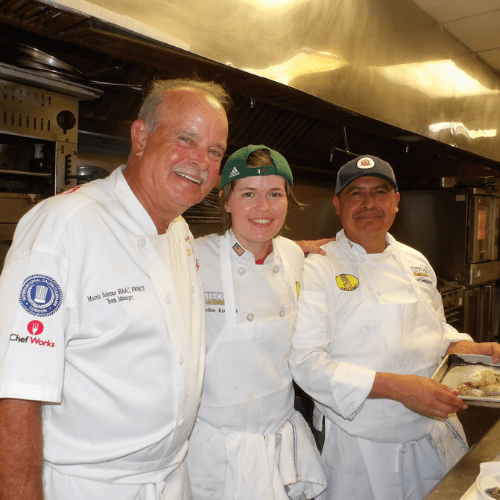
JR: My current boss, Chef Morris Salerno at Bistecca, is the biggest mentor in my life right now. When I got promoted, after the excitement, my next thought was: “Why me? Why does he think I can do this? I can’t believe he trusts me.” He believed in me more than I believed in myself. Now he’s pushing me, and now I’m like: of course I can do this. But before I couldn’t believe it.
Chef Morris once said that some of the hardest-working people in a kitchen are women. I feel like he just sees a hard worker; he doesn’t see gender in any of his workers.
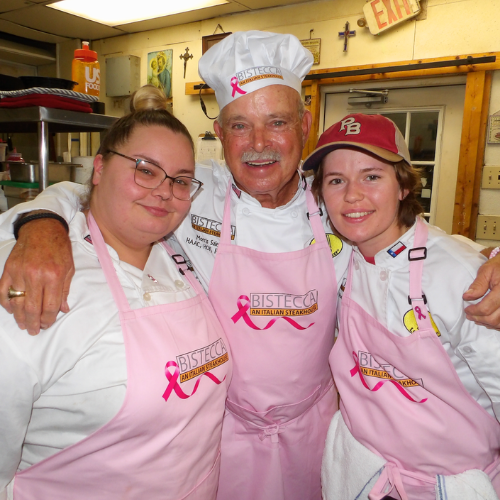
BR: We can definitely say he’s good people. He doesn’t see you as a woman first; he sees your potential and respects your capabilities. Without someone like that, it’s impossible to build a career.
JR: That’s a good point. Another guy at Mister Charles — he was sous chef, Brandon, they called him Cowboy. He’s the reason I got to work on the line. He saw me looking and showing interest, and one night he told me, “Jacqueline, go on the line.” And after, he told me, “Everyone was so surprised. You’re amazing. I can’t believe they didn’t know you know how to cook.” And I was like: I worked in restaurants for three years before culinary school.
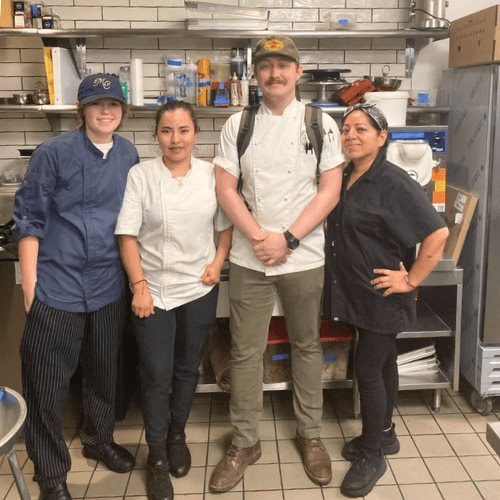
BR: Do you feel like being LGBTQ has shaped your experience in the industry? Obviously you met your partner through the industry.
JR: That’s a plus — my now girlfriend of over four years. Other than that, I don’t know if it helped with men — maybe to keep them away — but I don’t think it did. Men have a weird thing with gay women, so it attracted them more.
BR: Unfortunately, I think you might be right about that. Have kitchens felt accepting, challenging, both?
JR: I’ll tell you: I never came out at Mister Charles. I worked there eight months and no one knew I had a girlfriend. It was like I lived a split life. I’d go to work and be a different person. They’d ask, “What did you do this week?” and I’d say I hung out with friends. I never told them I lived with my girlfriend. It was hard to explain. I was scared and didn’t want anything to be different.
And recently, my girlfriend and I went to Mister Charles for Valentine’s Day dinner — and now I regret that I didn’t share that part of my life. I think it could’ve been more comfortable. My girlfriend, Mel, was always like, “Why can’t we go there?” and I didn’t want them to know I had a girlfriend.
BR: Well, it helps you have a hot girlfriend, right?
JR: Yeah. We went, and at the end of the night I took her to the kitchen and introduced her — because I made good friends there. But being LGBTQ in a kitchen setting has its downfalls. I didn’t feel comfortable enough at one of the places I worked to share that part of myself — because of the men. They were frightening. I didn’t want to open up. Now I regret it, but I was young — I was 19 — and I didn’t want that to be “a thing.” Being young, being a woman, and being gay is a triple threat.
BR: It makes sense: when you’re already being scrutinized as a young woman, you suppress anything else that could become “a topic.”
BR: Serious question. The restaurant industry runs on immigrant labor. Having worked closely with that community, how are you processing what’s happening politically right now?
JR: It’s awful. One of the biggest topics is “they’re taking our jobs,” blah blah — it’s absurd. At Mister Charles, I was the only white person other than the executive chef. Everyone else was Hispanic. That’s common in most kitchens, but I’m highlighting Mister Charles because it’s one of the best and biggest restaurants in Dallas, run almost completely by immigrants. And that’s with the front of house as well.
These people aren’t dangerous. They go to work. I heard their stories. They have kids here. They function in society. They’ve been working at the same place for 30 years. They have families. It’s not true what people say.
BR: These people are your neighbors. On a lighter note, you’ve been learning Spanish from the team. How’s that going? Any favorite phrases? They can be inappropriate.
JR: I was telling Mel the other day, now that I’m learning Spanish from a tutor and not just in the kitchen, it’s very difficult. I don’t know if I’m ever gonna be able to do it. Right now I’m learning verbs and tenses; it’s hard.
BR: It’s a privilege to speak two languages from birth.
JR: I started learning because I care about the people I work with, and it’s more comfortable for them to speak their first language, Spanish. I wanted to be able to converse and learn more about them.
BR: So no favorite word, no nothing?
JR: No, I get kind of nervous.
BR: Fun ones — rapid fire. What’s your favorite thing to cook?
JR: There’s not one specific thing. I mostly enjoy cooking at home when I’m creating something new — an idea I’m excited about. For a short time, I was making TikToks, had some I never posted, but I was coming up with ideas and cooking them.
I made a pan-seared duck with a cherry port wine gastrique, goat cheese foam mousse with chives, roasted butternut squash, and brussels sprout shavings.
BR: That sounds awesome. When can I come over?
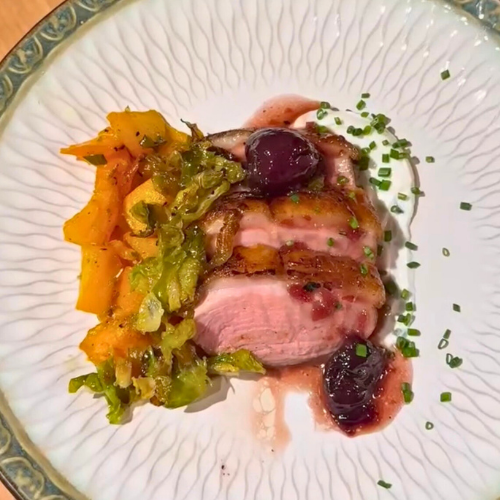
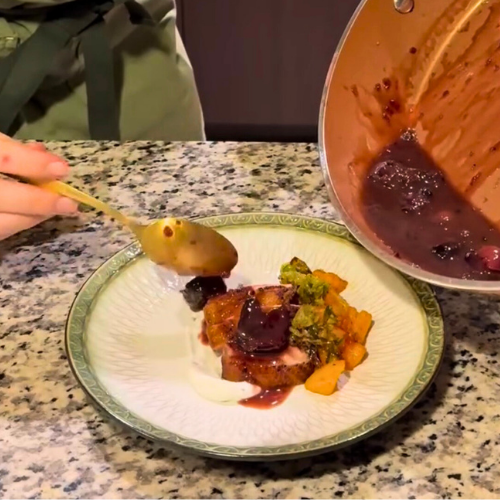
JR: It’s incredible. I wanted to make it for you now that you’re into duck. The reason I got into cooking was my passion — so when I get to be creative, I’m proud of it. Because I work so much, a lot of times it just feels like work.
BR: Favorite thing to eat?
JR: Steaks.
BR: What cut?
JR: New York strip. Don’t really like ribeyes. New York strip or filet.
BR: I’m taking credit for getting you into New York strip. Peppercorn gravy or butter herb?
JR: You know me — gravy.
BR: Current favorite thing on Bistecca’s menu?
JR: That’s hard… but the duck or the veal da vinci.
BR: Something you wish you could add to the menu?
JR: Change Chef’s duck to my duck.
BR: Something you don’t get to do enough at work?
JR: Breathe.
BR: What do you miss doing in real life because you’re always at the restaurant?
JR: Everything.
BR: Playing pickleball?
JR: Mostly I don’t get to spend enough time with my cat Birdie. She always wants my attention and I can never give her enough.
BR: Where do you go when someone else is cooking for you?
JR: I usually go to Rustico here in Flower Mound.
BR: Crazy answer, but okay. Best meal you’ve had recently?
JR: For sure, Mister Charles.
BR: What are your favorite snacks to eat at work?
JR: Everything. We make homemade croutons, so I eat the homemade croutons. I eat an orange a day. I dip croutons in the gorgonzola dressing. I dip fries in the brandy cream sauce. I take a fry off almost every plate of fries that goes in the window.
I take a fry, set it on my cutting board, take a little treat, cut it, eat a piece. When you start the duck, I cut the ends off where the fat cap is — we don’t serve that part — and I eat that. I also eat the little chicken tender on the bottom of the duck.
BR: So there’s a Jacqueline tax on every plate that goes out?
JR: Absolutely. We’re awful. We eat good. If we have a butt of salmon or snapper we can’t serve, we’ll cook it up. We call them botanas — a snack in Spanish. We’re always saying, “yo quiero un bontana, donde mi botana?”, Juan will be like: “I made you a bontana”. We’re always cooking the ends of the pork chop that we cut off.
BR: Talking about eating and drinking on the job- drinking is a huge part of restaurant culture. What’s your go-to drink? And what’s your perspective on drinking culture as someone leading a team?
JR: My go-to drink is a vodka soda. My perspective is: every restaurant I’ve worked at, everyone usually drinks at the end of the shift.
BR: Or during.
JR: Or during. I stay away from that. I don’t partake, but I’ve worked with people in the past who have. But at the end of the night, when it’s done, it’s a sense of community. It’s like: relax, we’re done with service. That’s why the industry has problems with drug usage and alcoholism — it’s stressful.
One drink to relax after a shift, getting to have that with your coworkers, is something special. Celebrate, sit around, talk, laugh. It’s an important part of our community as long as you can stay away from it becoming a bad habit and turning into something more.
JR: Mel wants me to tell you my nickname at work.
BR: What is it?
JR: My nickname is “piojosa.”
BR: Which means?
JR: Lice. Little lice.
BR: Is that because you have lice?
JR: We all have nicknames. The reason they gave me that nickname: there was a guy who used to work there who they called piojoso, and I was always talking about him so I’d call him “piojoso.” Then they started calling me “piojosa.” I kind of did it to myself.
BR: Last question. When are we hanging out next?
JR: No, for real. I got no time, bro. I’ll have to get back to you on that one.
BR: Okay, perfect. Thank you for your time. I have to go, but I’ll let you know how this comes out. This was really fun. I’m sad we don’t get to talk like this more.
JR: Yeah, pretty cool. Thank you for taking the time to want to ask questions and know the answers. I appreciate that.
BR: Okay, love you.
JR: Love you, talk to you later.
BR: Bye.
JR: Bye.
P.S. If this story was of interest to you, and you would like to keep up with Jacqueline, and what’s going on at Bistecca, you can follow Bistecca on Instagram @bisteccasalerno, where my wonderful friend Melanie Aviles is killing it on their socials.
Even better, visit Bistecca in person:
Bistecca Italian Steakhouse
2300 Highland Village Rd, Lewisville, TX 75077
Random pictures of my sister cooking
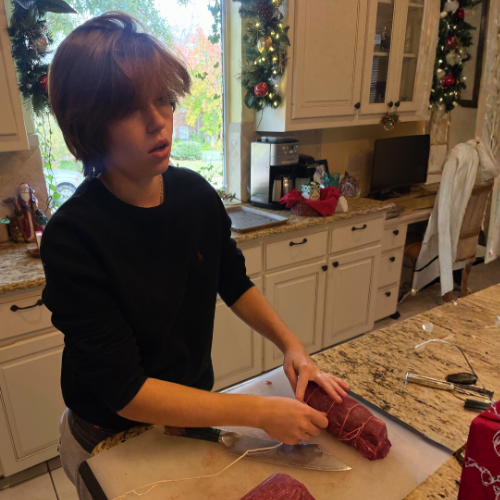
Jacqueline making Thanksgiving beef Wellington – November 2023 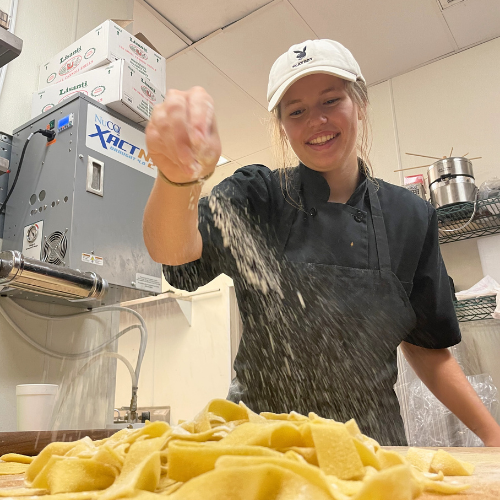
Jacqueline making pasta at Fiori – June 2021 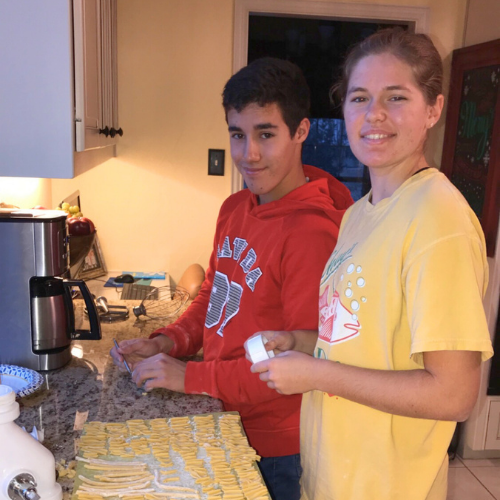
Jacqueline and Javier making pasta at home – January 2020 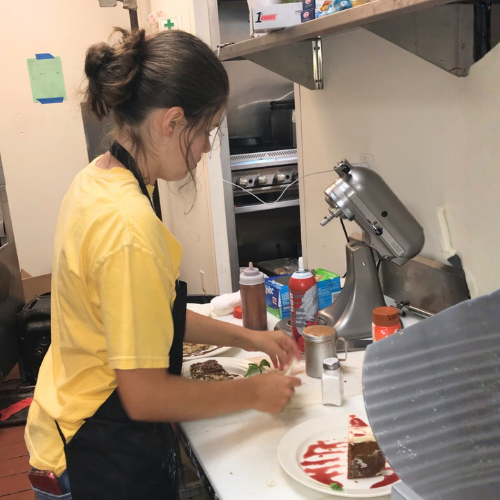
Jacqueline making desserts at Fiori – June 2019 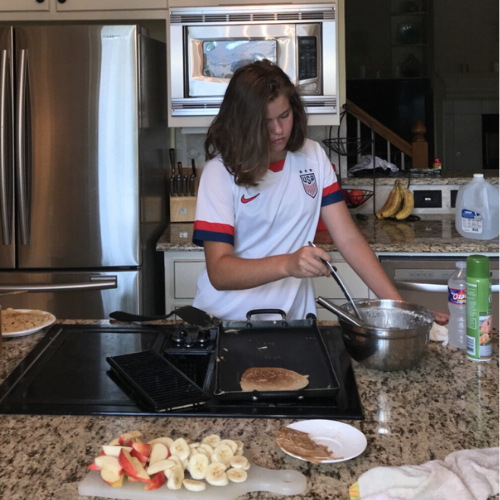
Jacqueline making german pancakes at home – June 2019 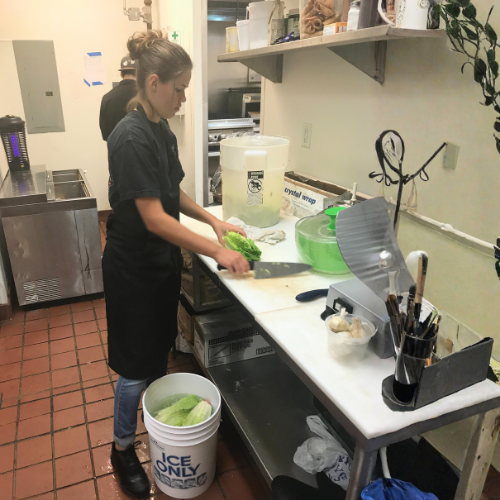
Jacqueline prepping salads at Fiori – June 2019 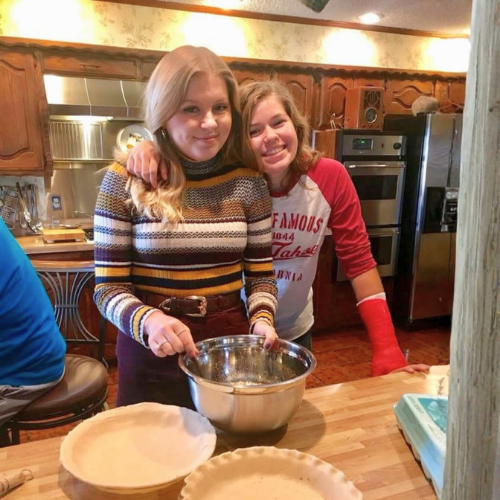
Jacqueline and I making Thanksgiving pecan pie – November 2018

 Brooklyn in Dallas