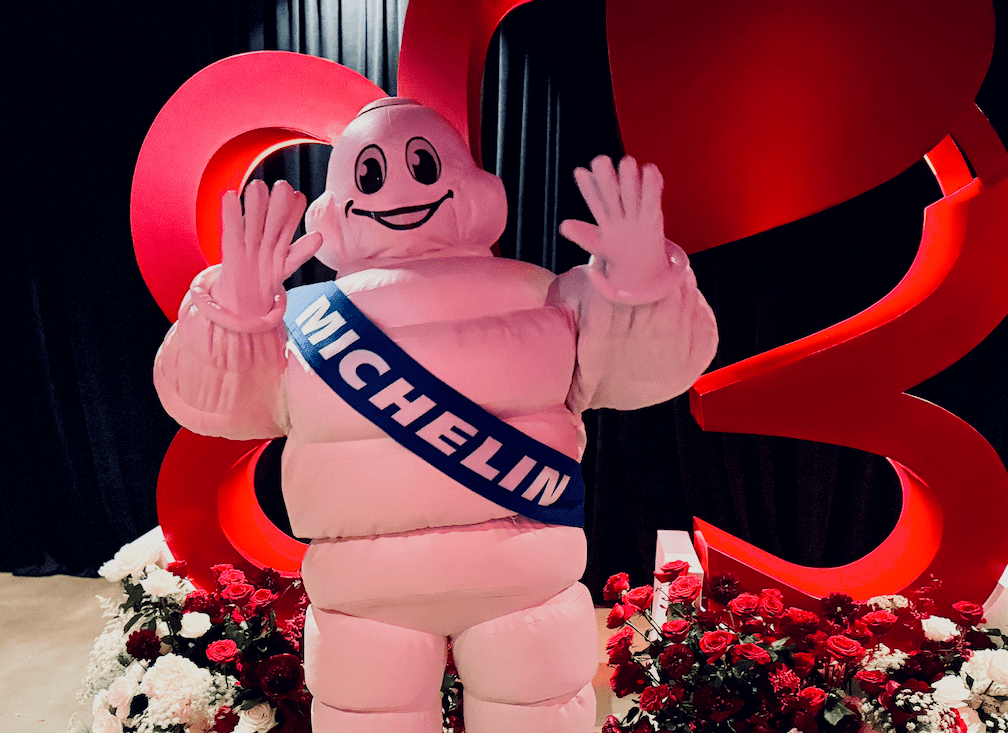
Why you shouldn’t care about the MICHELIN Guide
By Brooklyn Rodgers | JULY 8, 2026 | 2:31 PM
The MICHELIN Guide might be the world’s most prestigious restaurant guide, but if you’re trying to decide where to eat in Dallas, it tells you surprisingly little. Here’s why.
The MICHELIN Guide began as a marketing tool for a French tire company in 1900. It didn’t arrive in America until 2005, when New York was reviewed without paying for inclusion. Nearly twenty years later, Texas paid $2.7 million in taxpayer dollars to bring the Guide here.
MICHELIN’s presence fosters an ecosystem that inherently rewards high-volume, luxury hospitality groups. Dallas proper now hosts 24 restaurants with MICHELIN distinctions, roughly half of which are operated by large-scale hospitality groups with similarly large coffers.
There is a vested financial interest in being featured in the Guide. Mamani, brought to life by one of Dallas’s leading hospitality groups, received nearly 1000 reservations in the hours after it claimed its star in last year’s MICHELIN ceremony.
Take Tei-An as another example: Tei-An earned its MICHELIN distinction before it was acquired by Vandelay Hospitality, one of Dallas’s biggest hospitality groups. Today, Vandelay can market itself as the owner of a MICHELIN Recommended restaurant despite not operating it during either year it earned that designation.
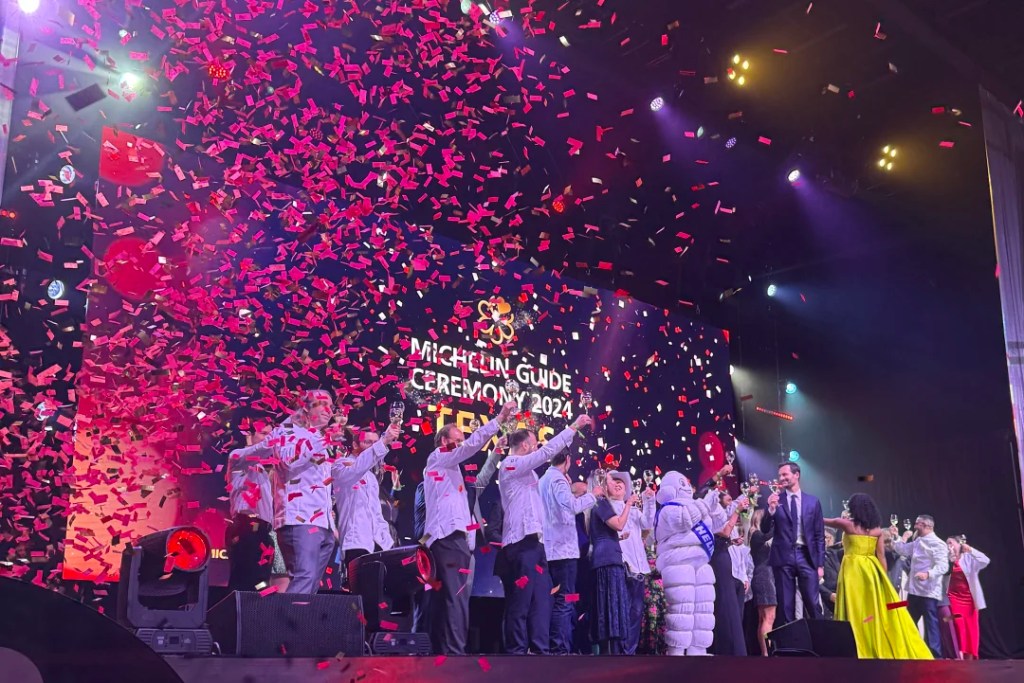
In November 2024, Texas was at the scene of the crime when the MICHELIN Guide announced a partnership with Sysco during the inaugural MICHELIN Guide Texas ceremony in Houston.
Who is Sysco? Just the world’s largest food distributor, headquartered in Houston, Texas, and serving over 700,000 customer locations globally.
On paper, Sysco gains the opportunity to present the MICHELIN Guide Young Chef Award at annual ceremonies across the country. Sysco can also “look forward to seeing many of our Sysco customers receive a MICHELIN Star or another MICHELIN Guide distinction…in the future,” said Victoria Gutierrez, Sysco’s Chief Merchandising Officer.
MICHELIN debuted in Texas hand in hand with Sysco, and the synergies were palpable. The Grape Reset put it best: “Both need what the other has: MICHELIN needs logistics and funding; Sysco needs prestige.”
Sysco acquires Restaurant Depot
In March 2026, Sysco announced that it would acquire Restaurant Depot for a cool $29.1 billion. Restaurant Depot has long served as one of Sysco’s competitors, giving restaurants another option for sourcing ingredients, avoiding delivery minimums, and shopping around for better pricing. Its eventual elimination means smaller margins for independent operators, as they lose one more avenue to negotiate costs, further contributing to consumers being priced out of dining out.
Margins and diners’ budgets are less of an issue in the fine-dining world, where MICHELIN stars are awarded. MICHELIN does make an attempt to consider price in its Bib Gourmand designation, which recognizes restaurants serving high-quality food at an affordable price, constituting “a three-course meal with starter, main course and dessert” within a fixed price range of roughly $40.
Being in bed with Sysco makes that $40 threshold feel hollow when the Guide is partnered with a company whose continued market consolidation could ultimately erode what that $40 actually buys, both for diners and the restaurants trying to earn it.
Sysco isn’t pro-restaurant; they simply do business with restaurants. Synergistically, so does MICHELIN.
So what does any of this have to do with where you should eat tonight?
Food is incredibly personal. Most of us don’t choose restaurants because a tire company awarded them a star. We choose them because they’re where we celebrate birthdays, grieve losses, catch up with friends, impress dates, or simply grab dinner after work. I’ve said before that food tells the story of a place, and it begs the question: whose stories are being put at the forefront?
Restaurant PR will always matter in the never-ending struggle to stay relevant and communicate value to consumers. The problem is that much of the restaurant coverage we consume lives at one of two extremes. On one end sits the MICHELIN guide: without question the world’s most recognizable restaurant accolade, handed down by “qualified” critics, following a system that, while partially public, remains largely opaque. Whether intentional or not, MICHELIN projects authority. But it’s also a complicated organization whose motives are worth side-eying, from its origins to its present-day partnerships.
On the other end are food influencers: anyone with a camera and an opinion, often lacking both the culinary background and the vocabulary to meaningfully explain why a restaurant is good.
So who occupies the middle ground? Local food journalism. Which, sadly, is on its last leg.
My personal favorite has always been Brian Reinhart of D Magazine. He remains North Texas’s only full-time employed food critic. His reviews are thoughtful, technically informed, and rooted in the Dallas dining scene rather than internet hype or international prestige.
Eater once gave local food writers a respected platform to cover Dallas and the rest of Texas, but it was dismantled with the layoff of its Texas editorial staff in August 2025. The Dallas Morning News still similarly provides meaningful restaurant coverage, but its sale to Hearst Communications in September 2025 ended 140 years of local, family-controlled ownership.
Dallas is one of the largest cities in the country. The Dallas-Fort Worth Metroplex is one of America’s fastest-growing regions. Texas has the eighth-largest economy in the world.
That’s why we need more people talking about Dallas restaurants. The MICHELIN Guide and food influencers are welcome at the table, but they shouldn’t be the only voices in the room. Read them. Watch them. Just take their recommendations with a grain of Sysco-brand salt.
I don’t pretend to know how we rebuild the middle ground of food journalism. I’m sure it’s a funding problem, a logistics problem, and about a dozen other problems beyond my expertise. What I do know is this: the more we read, support, and value local food writers, the better we’ll understand the city they’re documenting.
Food tells the story of a place.
The more people telling Dallas’s story honestly, thoughtfully, and locally, the better our food culture and our city become.
Dallas doesn’t need more stars. It needs more storytellers.


